
Breed Dossier No. 004 · Working Group
Boxer
A German hunting mastiff bred to seize a boar by the face and hold it until a man arrived with a knife. The jaw is still built for that. The dog now uses it to lean on your leg.
Boxer Medallion Tees
The unvarnished verdict
A working dog in a clown suit, with a cancer problem.
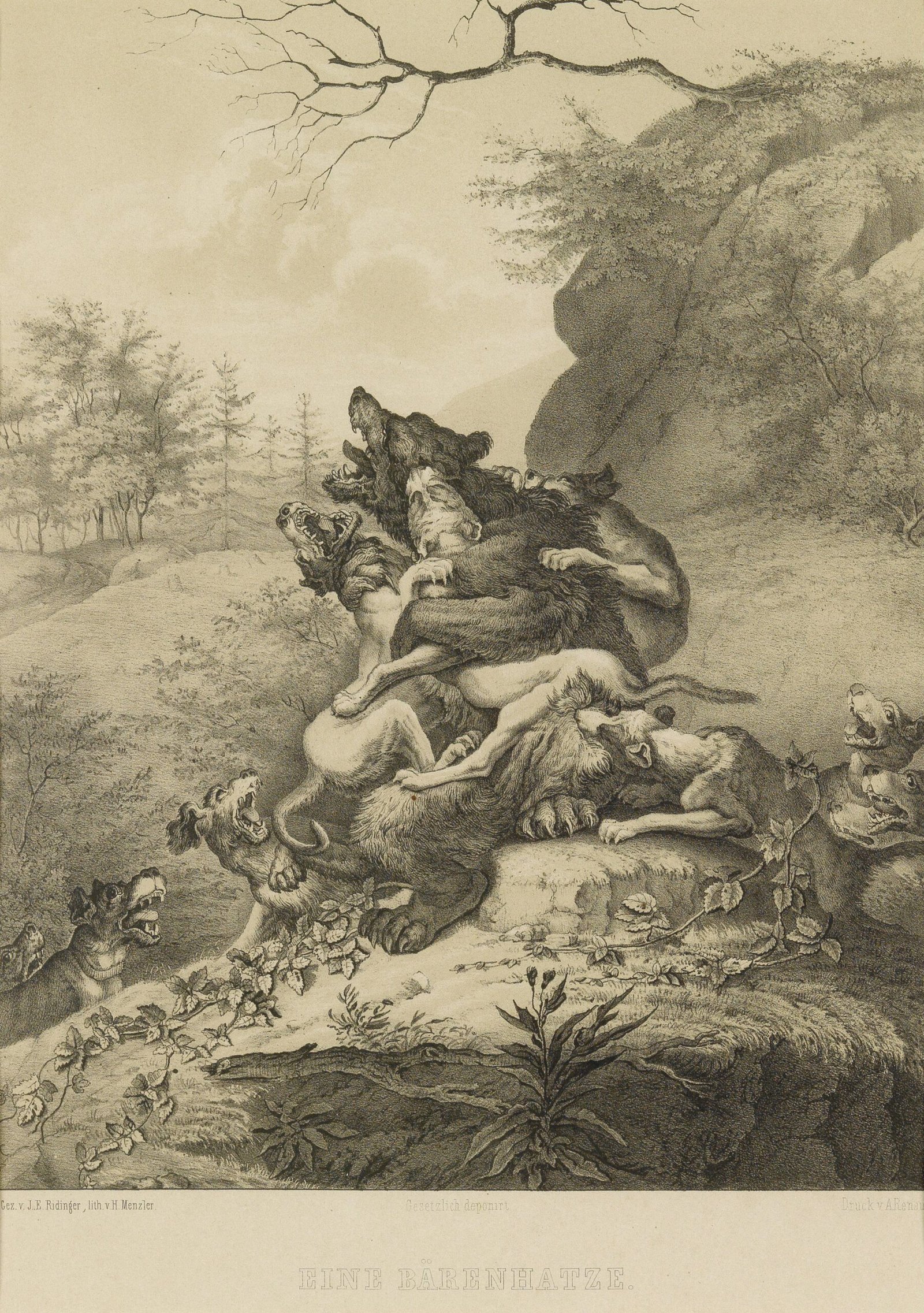
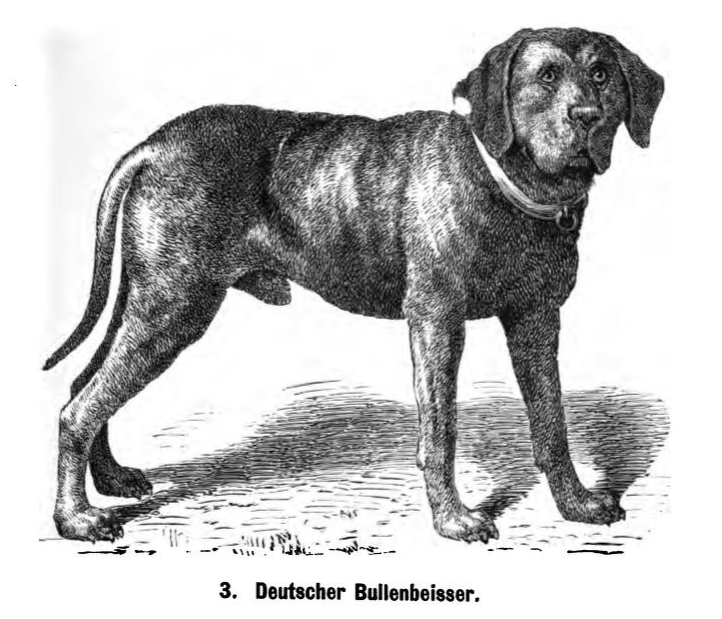
The Boxer descends from the Bullenbeisser — the ‘bull-biter’ — a German hunting mastiff whose job was to grip large game by the face and hold it, without letting go, until the huntsman closed the distance. The undershot jaw, the broad muzzle and the set-back nose are not cosmetic quirks. They are the mechanism: grip with the mouth full, breathe through the nose.
When the great estates broke up in the 1800s the Bullenbeisser went to work for butchers and cattle dealers, and then to Munich, where it was crossed with imported English Bulldogs. The Deutscher Boxer Klub formed in 1896 and published a standard in 1902; the first dog in the club’s stud book, Flocki, was registered in 1904.
It is one of the most affectionate and most physically demonstrative dogs in the working group, and one of the shortest-lived. You need to know the second part before you fall for the first.
Ownership scorecard
Willing, not obedient. And it will not grow up on your schedule.
Trainability
6/10
Eager and handler-focused, but bores fast and shuts down under harsh handling. Short varied sessions or nothing.
Energy
8/10
Explosive rather than enduring. Needs real daily output but overheats quickly — a flat-faced dog cannot run in the heat.
Family fit
8/10
One of the best dogs with children in the group, provided the children can survive being knocked over.
Longevity
4/10
The hard number. Cancer and cardiomyopathy make this a nine-to-twelve-year dog, and frequently less.
Origins
Built to hold a boar’s face.
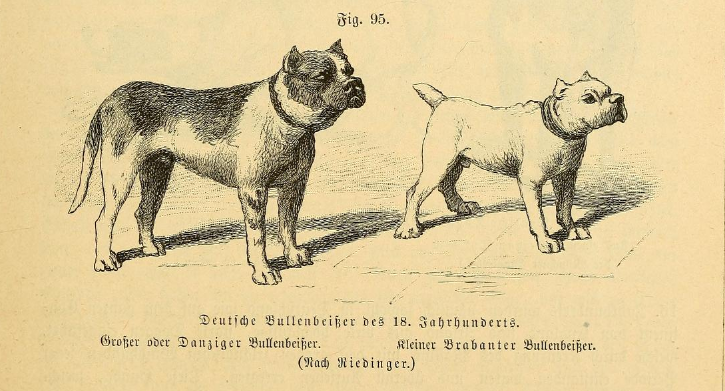
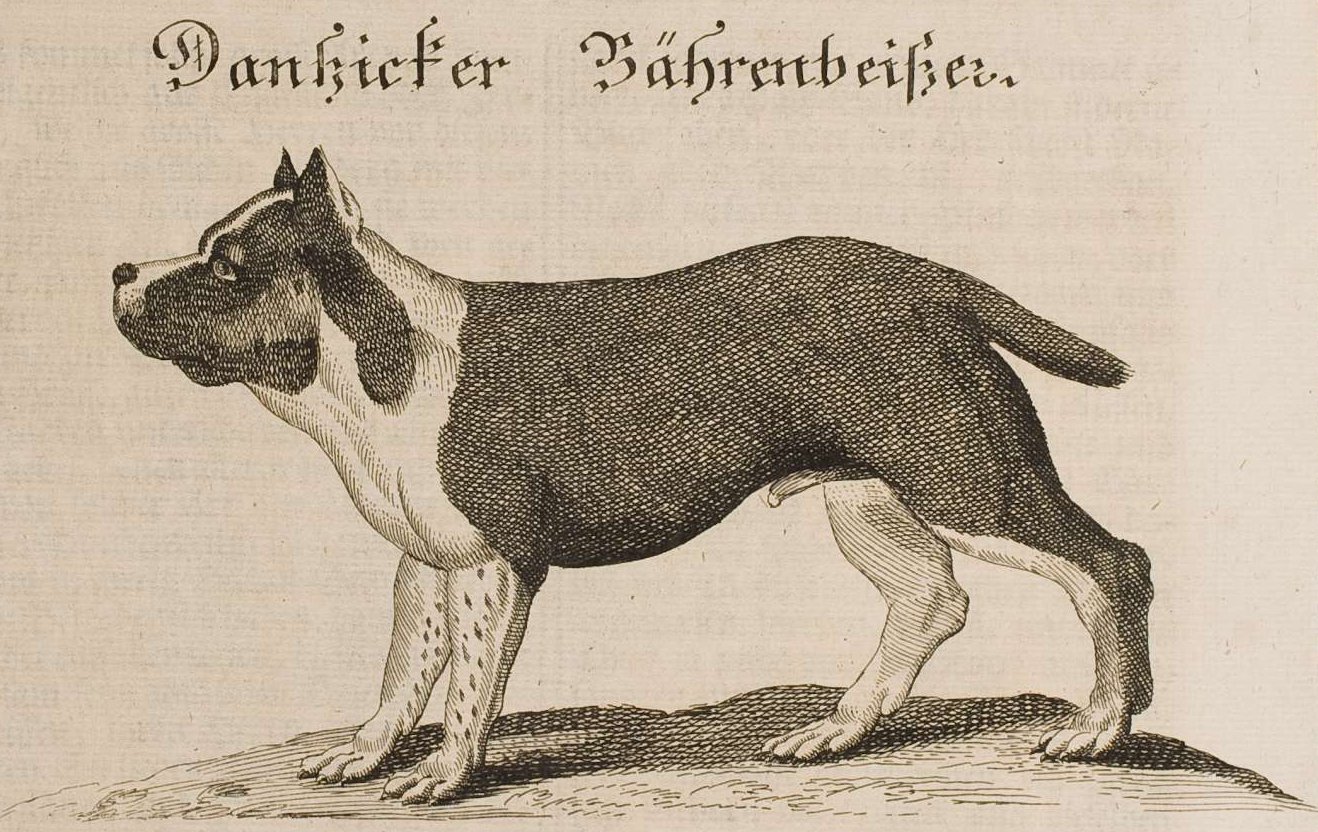
The Bullenbeisser was the catch dog of German nobility: it ran with the hounds and took hold when the game was brought to bay. Two regional types existed — the larger Danziger and the smaller Brabanter, which is the Boxer’s direct ancestor.
Every feature people now call ‘cute’ was load-bearing. The set-back, upturned nose let the dog breathe while its mouth was full. The undershot bite gave a wider, more secure grip. The broad muzzle and deep chin spread the force. Cropped ears and docked tails were working modifications made to remove things an animal could grab, not fashion choices.
From the hunting estate to the butcher’s yard to Munich.
Land reform and changing hunting practice broke up the estates that kept catch dogs. The Bullenbeisser found new work with butchers and cattle dealers, driving and holding stock in the yards.
In the 1880s and 1890s Munich breeders crossed the local dogs with imported English Bulldogs to tighten the type. Georg Alt’s brindle bitch Alt’s Schecken, bred to an imported bulldog called Tom, produced Flocki — entered as number one in the Deutscher Boxer Klub stud book in 1904. The club itself had formed in 1896, and the first written standard appeared in 1902.
One of the first modern service dogs.
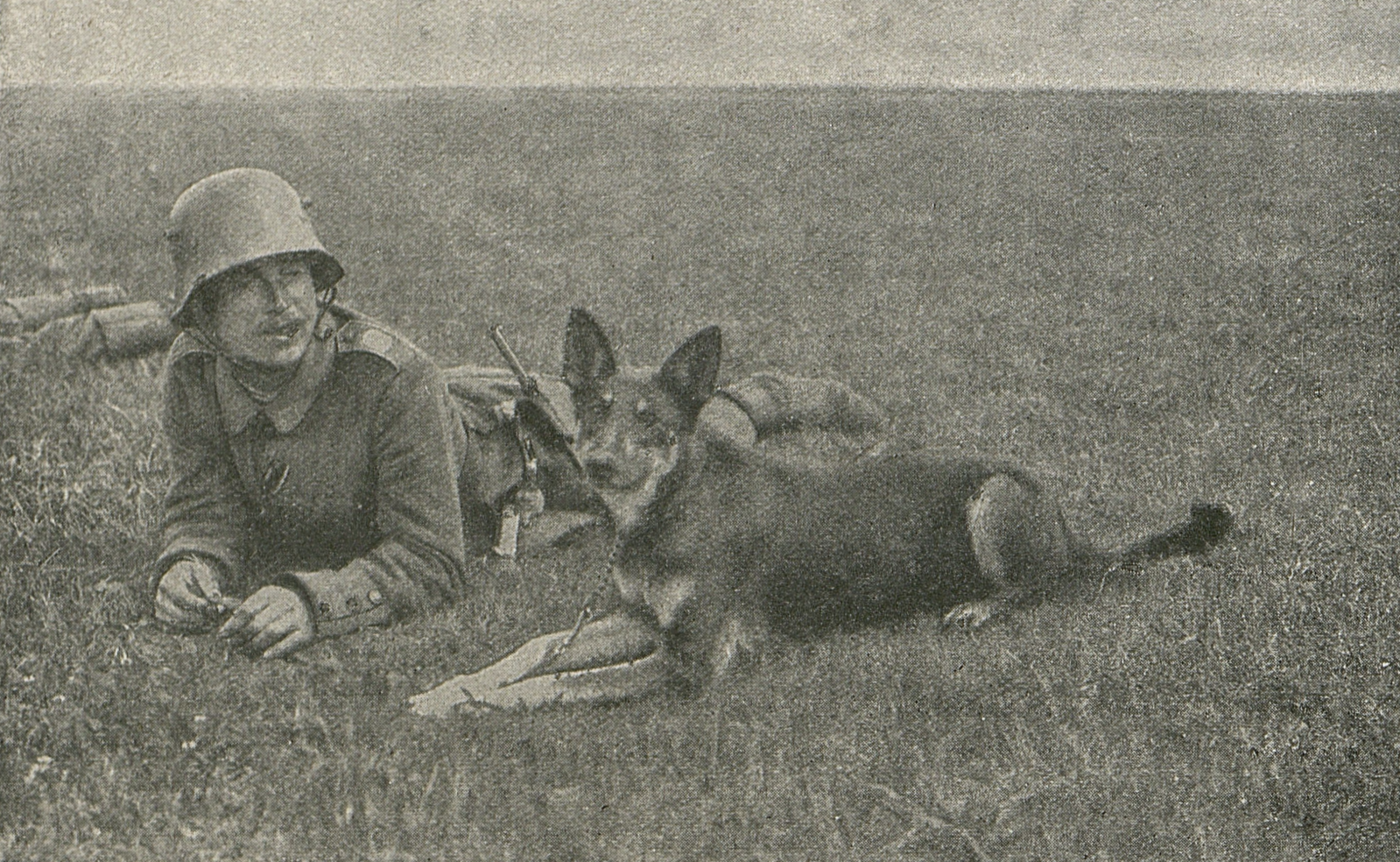
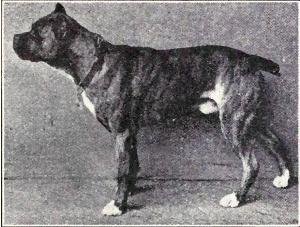
The Boxer was among the earliest breeds taken up by German police, and in the First World War by the military — messenger dog, pack carrier, guard and casualty dog. Friederun Stockmann’s vom Dom kennel supplied dogs to the army and became the most influential Boxer kennel in the world.
American servicemen brought the breed home after 1945 and it exploded. By the 1950s the Boxer was among the most registered dogs in the United States, helped by Bang Away of Sirrah Crest, who took Best in Show at Westminster in 1951 and became a genuine national celebrity.
The name argument
Nobody actually knows why it is called a Boxer.
The popular explanation — that Boxers spar with their front paws — describes real behaviour but makes weak etymology. Competing accounts trace the name to ‘Boxl’, a corruption of Bullenbeisser; to the ‘Bierboxer’ of the Munich beer halls; or to an English loanword adopted because it sounded modern.
The honest answer is that the origin is not documented. Any breeder who states one version as fact is repeating a guess with confidence.
Three years of adolescence.
Boxers mature slowly in body and mind, and most are not adult dogs until close to three. Expect a large, powerful, bouncing animal that means well and lands on people. Body-slamming, jumping and mouthing are defaults, not misbehaviour — train the greeting before the dog weighs sixty-five pounds, because after that you are negotiating.
They are also intensely people-oriented. A Boxer left alone in a yard becomes a barking, digging, destructive problem within weeks. This is an indoor dog with an outdoor engine, and it does not work any other way.
It cannot cool itself properly.
The Boxer is brachycephalic. A shortened muzzle limits how much heat a dog can shed by panting, and in warm weather a Boxer can overheat doing work most breeds would find trivial.
The rules are simple and non-negotiable: exercise in the cool part of the day, never leave it in a car or an unshaded yard, and treat noisy or laboured breathing at rest as a veterinary problem rather than a breed characteristic. Surgery for narrow nostrils and an elongated soft palate is common and genuinely effective. Also expect snoring, drooling, flatulence, and poor tolerance of cold as well as heat.
Health & genetics
This is where the honesty matters.
The Boxer has one of the highest cancer rates of any breed and an inherited heart disease named after it. Breed club health surveys have repeatedly put cancer at or near the top of causes of death. None of that means you should not own one. It means you choose the breeder on test results, and you budget for veterinary care from the first week.
Cancer
The leading killer. Mast cell tumours, lymphoma and brain tumours are all over-represented. Check for lumps monthly and have every new one aspirated — early mast cell disease is frequently curable, late mast cell disease is not.
Boxer cardiomyopathy
Arrhythmogenic right ventricular cardiomyopathy is a breed-specific heart disease causing arrhythmia, collapse and sudden death. A striatin DNA test exists, but ask for the parents’ Holter monitor results too — the gene test alone does not tell the whole story.
Aortic / subaortic stenosis
A common congenital heart defect in this breed. Both parents should have been examined by a veterinary cardiologist, not merely listened to by a general practitioner at a puppy check.
Degenerative myelopathy
A progressive and painless spinal cord disease that ends in hind-limb paralysis. The SOD1 DNA test is cheap and widely available; a competent breeder will not produce an at-risk pairing.
Histiocytic ulcerative colitis
A Boxer-specific bowel disease causing bloody diarrhoea in young dogs. It responds to a specific antibiotic protocol and is routinely misdiagnosed as ordinary IBD for months while the dog gets worse.
White coat & deafness
Roughly a fifth to a quarter of Boxers are born white. They are not albino and not defective, but they carry a materially higher rate of congenital deafness and need sun protection. Ask whether the litter was BAER tested.
Best owner
An active household that is home a lot, wants a dog physically involved in its life, and can absorb serious veterinary bills without flinching. Excellent with children, generally sociable, and a reasonable first big dog for someone prepared to train early and consistently.
Worst mismatch
Hot climates without air conditioning. Owners who want a settled dog in year one. Anyone needing an outdoor or kennel dog. And anyone who wants a long-lived breed — on average you get about a decade, and the last part of it is often expensive.
The bottom line: the Boxer gives you as much dog as almost anything in the working group — funny, physical, devoted, permanently involved in your business — and it charges for it in years and in veterinary bills. Buy from a breeder who volunteers Holter results, cardiologist reports and DNA panels before you ask for them. If they do not, walk away.
Owner’s kit
The Boxer Kit
Built around the three things that actually shorten a Boxer’s life or your patience: heat, impact, and a three-year adolescence.
The Medallion
Two medallions for this dossier — natural ears, and cropped as the working dogs were kept.
Barking Past
Boxer, Natural Ears Medallion Tee
Bella + Canvas 3001 staple tee. Six colours, XS–5XL, $29.99 with free US shipping. Printed to order.
Order the tee
Barking Past
Boxer, Cropped Ears Medallion Tee
Bella + Canvas 3001 staple tee. Six colours, XS–5XL, $29.99 with free US shipping. Printed to order.
Order the teeI. Heat & Breathing
Flat-faced dogs die of heat every summer, and almost all of it is preventable equipment and timing.
Cooling
Evaporative cooling vest
Soak, wring, wear. Buys you a walk in weather that would otherwise be off the table.
AmazonRecovery
Pressure-activated cooling mat
No power and no water needed. A place to dump heat after exercise instead of panting on the floor.
AmazonWater
Portable water bottle and bowl
A brachycephalic dog cannot wait until you get home. Carry water on every walk over ten minutes.
AmazonAirway
Front-clip harness
Never walk a Boxer on a neck collar. Take the pressure off an airway that is already compromised.
AmazonVitals
Digital pet thermometer
Heatstroke is a numbers game. Above 104°F on a hot day is an emergency, not a wait-and-see.
AmazonRest
Elevated mesh bed
Airflow underneath is worth more than any fan for a dog that runs hot around the clock.
AmazonII. Impact & Joints
A seventy-pound dog that launches itself at people and furniture for three years puts real load through its joints, and yours.
Sleep
Orthopaedic memory foam bed
Heavy-boned dog, hard floors, ten years. Start it early rather than after the limp.
AmazonTraction
Non-slip floor runners
Boxers turn at speed on hard floors. Traction is one of the few cheap ways to reduce cruciate injuries.
AmazonCar
Crash-tested car harness
An unrestrained seventy-pound dog is a projectile. This is the item people skip and regret.
AmazonJoints
Glucosamine joint supplement
Cheap insurance for a heavy, athletic, hard-landing breed. Start in adulthood, not in old age.
AmazonLoading
Folding car ramp
The jump down out of an SUV is where most of the front-end damage happens over a decade.
AmazonChew
Extreme-duty chew toy
The jaw was designed to hold a boar in place. Price and rate your toys accordingly.
AmazonIII. The Adolescence
Two to three years of a strong, bored, over-friendly dog. Structure is considerably cheaper than damage.
Barking Past is an Amazon Associate. The links above are affiliate links — if you buy through them we earn a small commission at no extra cost to you. It does not change what we recommend.
Sources & further reading
- Deutscher Boxer Klub, Zuchtbuch (stud book), Munich — entry no. 1, Flocki, 1904; first written standard, 1902.
- John P. Wagner, The Boxer (1939) — the foundational English-language breed history.
- Friederun Stockmann, My Life with Boxers — vom Dom kennel records, including First World War military service.
- German hunting literature on the Bullenbeisser as a catch dog, describing the Brabanter and Danziger types.
- American Kennel Club recognition records, 1904; Westminster Kennel Club Best in Show, Bang Away of Sirrah Crest, 1951.
- Meurs KM et al., striatin mutation associated with arrhythmogenic right ventricular cardiomyopathy in the Boxer — North Carolina State University.
- American Boxer Charitable Foundation health survey data on cancer and cardiac mortality.
- Orthopedic Foundation for Animals; University of Missouri SOD1 degenerative myelopathy testing.