Breed Dossier No. 003 · Hound Group
Beagle
A pack hound bred to trail hare on foot, by nose, for hours, without instruction. Then it was made small and cute. The nose did not get the memo.
Beagle Medallion Tee
The unvarnished verdict
The nose is in charge, and you are not.
The Beagle is a scenthound engineered to work in a pack, independently of the huntsman, and to announce every find at volume. Both traits are fully intact. What you get is a cheerful, sturdy, almost never aggressive dog that will absolutely leave you for a smell.
Small hare hounds are recorded in England from the fifteenth century, but the modern dog dates to the 1830s, when a Reverend in Essex assembled the pack that everything since descends from. It was refined for looks in England, standardised in 1890, and turned into an American household fixture by an Illinois importer and, later, by a cartoon.
It fails as a pet for one reason above all: people buy a small hound expecting a small dog, and get a working animal with a nose carrying roughly two hundred million receptors, a hunting voice built to carry across a valley, and no reason at all to come back when called.
Ownership scorecard
Easy to like. Hard to contain.
Trainability
4/10
Ferociously food-motivated and quick to learn. Recall against a live scent is close to hopeless.
Energy
7/10
Built for hours of trotting. An under-exercised Beagle becomes a loud, destructive, overweight Beagle.
Family fit
8/10
Pack-bred and tolerant. Genuinely good with children and with other dogs.
Vocal volume
9/10
Bays, howls and bawls by design. This is the most common single reason Beagles are rehomed.
Origins
Older than the word for it.
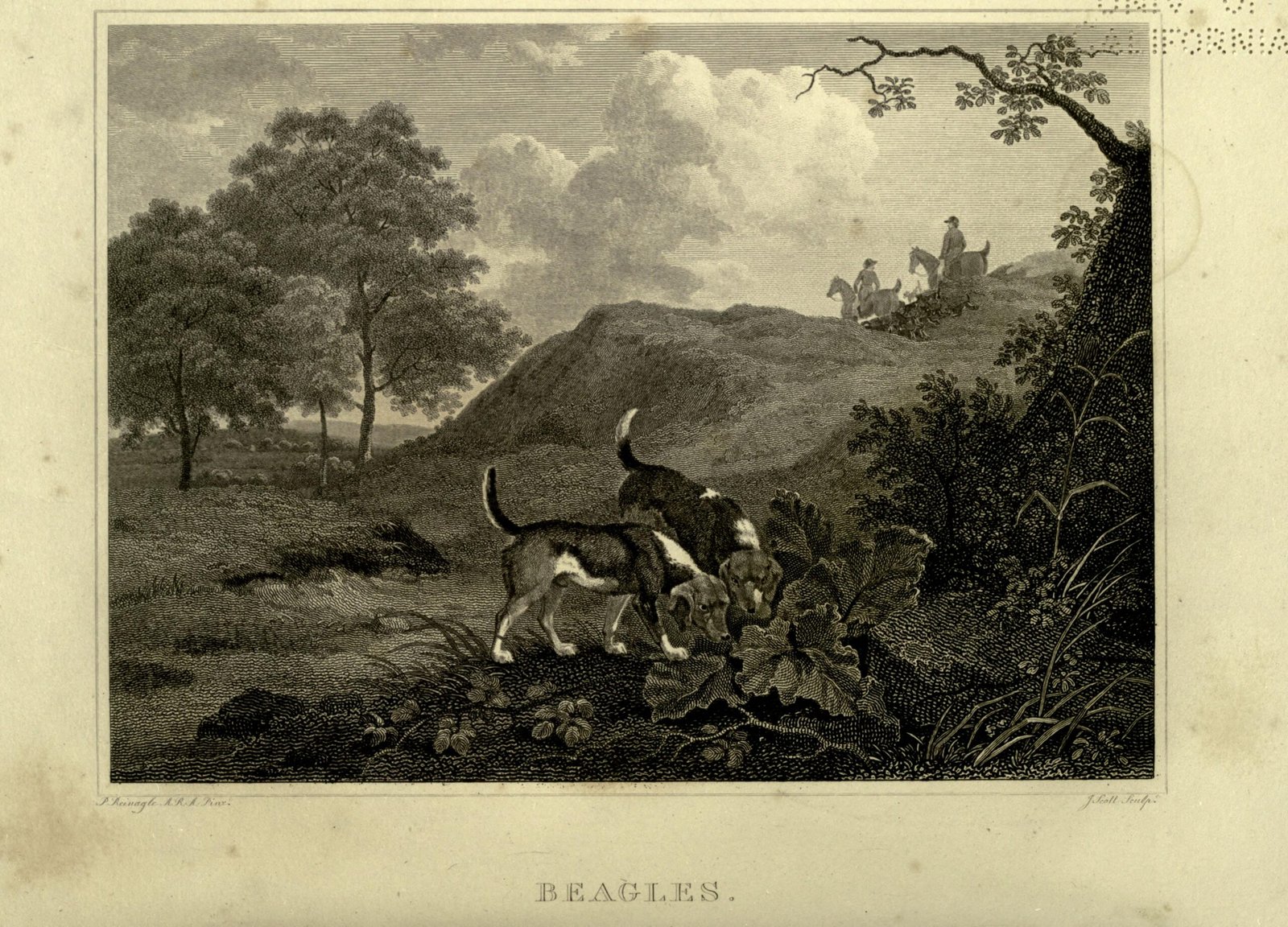
Small hounds used to hunt hare on foot appear in English records long before the name settled. The word itself shows up in English by the late 1400s; the usual etymology traces it to the Old French beée gueule, roughly ‘open throat’ — the dog named for the noise it makes.
Elizabeth I is credited with keeping ‘pocket beagles’ small enough to carry in a saddlebag. That story is repeated with far more confidence than the evidence supports, but the underlying point holds: for centuries ‘beagle’ described a size and a job, not a fixed breed.
One Essex parson built the modern dog.
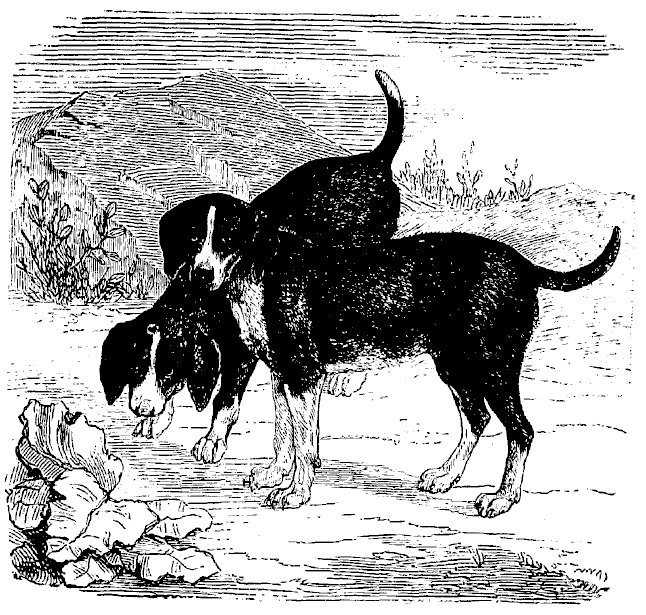
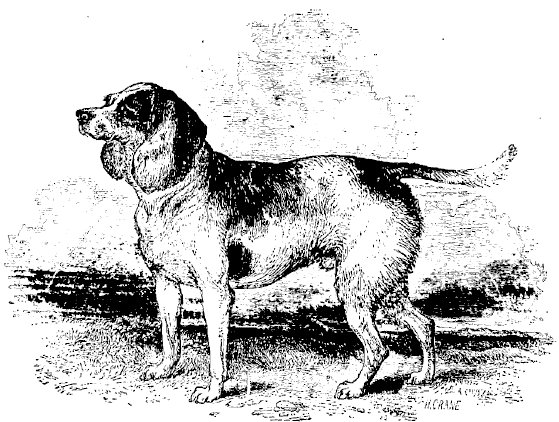
By the early 1800s the older English hound types were dying out. The Southern Hound was heavy, slow and deep-voiced; the North Country Beagle was lighter and faster; mounted foxhunting was eating both. In the 1830s the Reverend Phillip Honeywood established a pack in Essex that is generally taken as the foundation of the modern Beagle, with Thomas Johnson credited for making the dogs look as good as they hunted.
The Beagle Club was founded in England in 1890 and wrote the first standard; the Association of Masters of Harriers and Beagles followed in 1891. Everything you can buy today comes out of that narrow window.
America made it a household name.
General Richard Rowett of Carlinville, Illinois imported English beagles in the 1870s, and the ‘Rowett beagles’ became the foundation of the American type. The AKC recognised the breed in 1885; the National Beagle Club of America formed in 1888.
By the mid-twentieth century the Beagle was one of the most registered dogs in the United States and has never really left the top ten. A cartoon dog who never once hunted a hare has done more for the breed’s public image than any kennel.
The part nobody prints on the puppy page
It is the world’s standard laboratory dog.
The Beagle’s size, docility and tolerance of confinement made it the default animal for toxicology and pharmaceutical testing worldwide. Tens of thousands are bred for laboratories every year. The footage you have seen of dogs walking out of research facilities into daylight is almost always Beagles.
The same traits work in the other direction too: the USDA’s Beagle Brigade has worked American airports since 1984, screening baggage for prohibited agricultural products, chosen for exactly that combination of nose and friendliness. The breed is used because it is good-natured. That is worth sitting with.
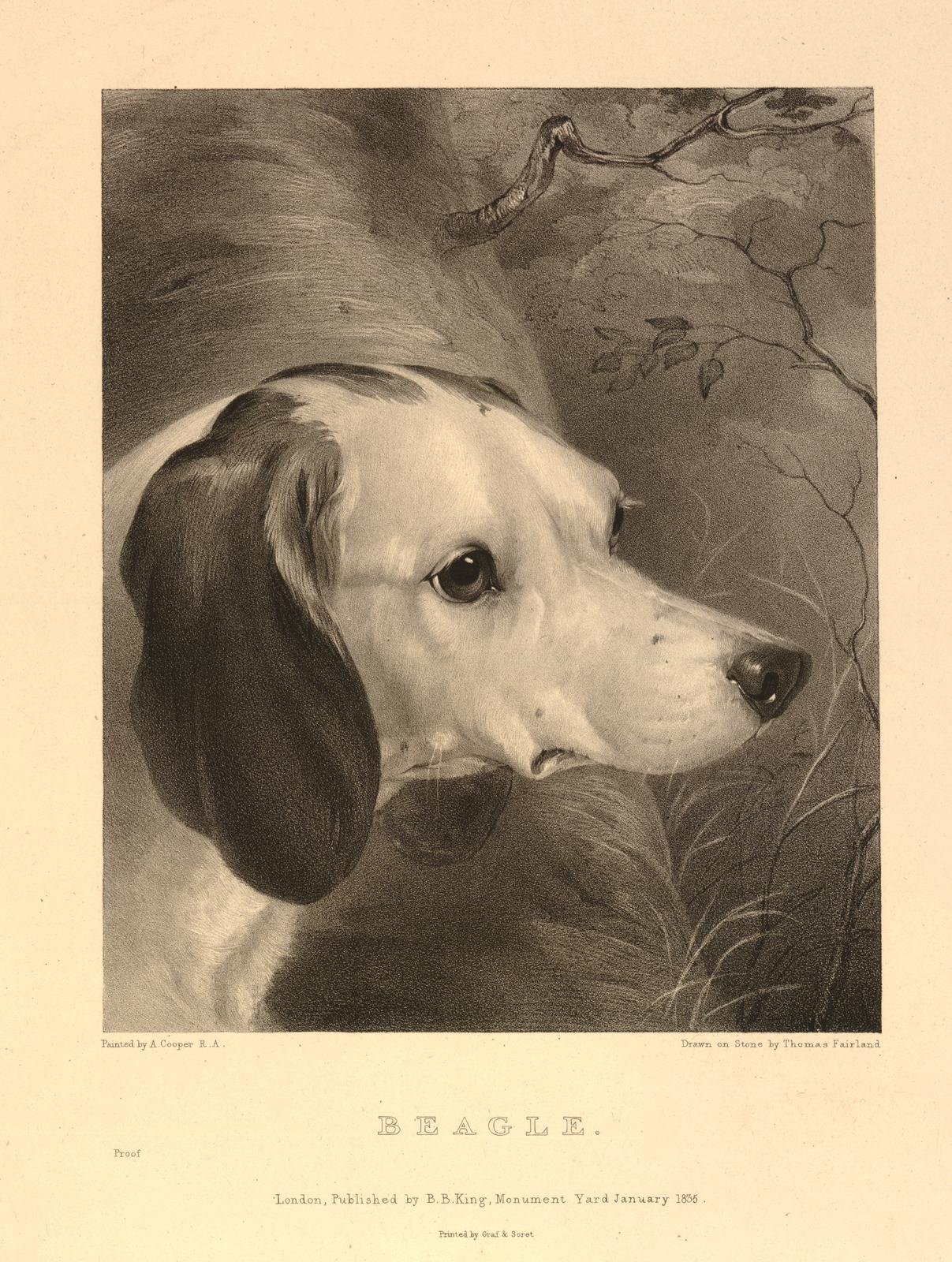
Two hundred and twenty million receptors.
Estimates put the Beagle’s olfactory receptor count around 220 million, against roughly five million in a human. It was bred to work a cold line — an old, faint trail — for hours, in a pack, without direction from a handler.
That means it is built to ignore you while working, and built to give tongue when it finds something. Poor recall is not a training failure. It is your cue competing with a hard-wired job, and the job usually wins.
The failure modes are entirely predictable.
Escaping under fences and following a scent for miles. Obesity, in a breed that will eat until it is ill. Destruction and noise when bored or left alone. Housetraining that takes longer than owners expect. None of this is a surprise and all of it is in the original job description.
What actually works: long-line walks where the dog is allowed to sniff properly, scentwork and nosework games, food puzzles instead of food bowls, a fence with a buried or anchored bottom edge, and an acceptance that off-leash freedom is not on the menu.
Health & genetics
A long-lived breed with one owner-made disease.
Beagles are genuinely robust and often reach fourteen. The most damaging condition in the breed is not inherited at all — it is the food bowl.
Obesity
The defining Beagle health problem and entirely owner-controlled. Excess weight drives disc disease, joint pain, diabetes and a shorter life. Weigh the food and ignore the eyes.
Intervertebral disc disease
Long back, short chondrodystrophic legs. Discourage jumping off furniture and repeated stair sprints, and keep the dog genuinely lean rather than ‘a bit solid’.
Epilepsy
Idiopathic epilepsy is over-represented in the breed and usually first appears between one and three years old. Ask the breeder directly whether there have been seizures in the line.
Ears and eyes
Pendant ears trap moisture, so expect a cleaning routine rather than a reaction. Also screen for cherry eye, distichiasis and primary open-angle glaucoma, which has a DNA test.
Musladin-Lueke Syndrome
A Beagle-specific connective tissue disorder producing tight skin, stiff joints and an altered gait. A DNA test exists and any serious breeder will have used it.
Thyroid and Factor VII
Hypothyroidism is common and easily missed. Factor VII deficiency is a mild inherited bleeding disorder with a DNA test. Ask for both in writing before you pay a deposit.
Best owner
Someone who wants a friendly, sturdy, easy-coated dog and is honest about the terms: securely fenced yard, leash or long line for life, daily sniffing exercise, measured meals, and a household that can live with noise. Excellent with children, excellent with other dogs, an outstanding first hound.
Worst mismatch
Apartments with shared walls. Anyone who wants an off-leash hiking companion. Households with rabbits, guinea pigs or a cat that runs. And anyone who assumes that a small dog means a low-effort dog — this is the trap that fills Beagle rescues.
The bottom line: the Beagle is one of the easiest dogs to love and one of the hardest to contain. Give it a fence, a long line, work for its nose and a measured bowl and you get a superb family dog for twelve to fifteen years. Skip any one of those and you get a loud, overweight escape artist — which is precisely why so many end up in rescue.
Owner’s kit
The Beagle Kit
Everything here targets the three things that actually go wrong with a Beagle: the nose, the noise and the waistline.
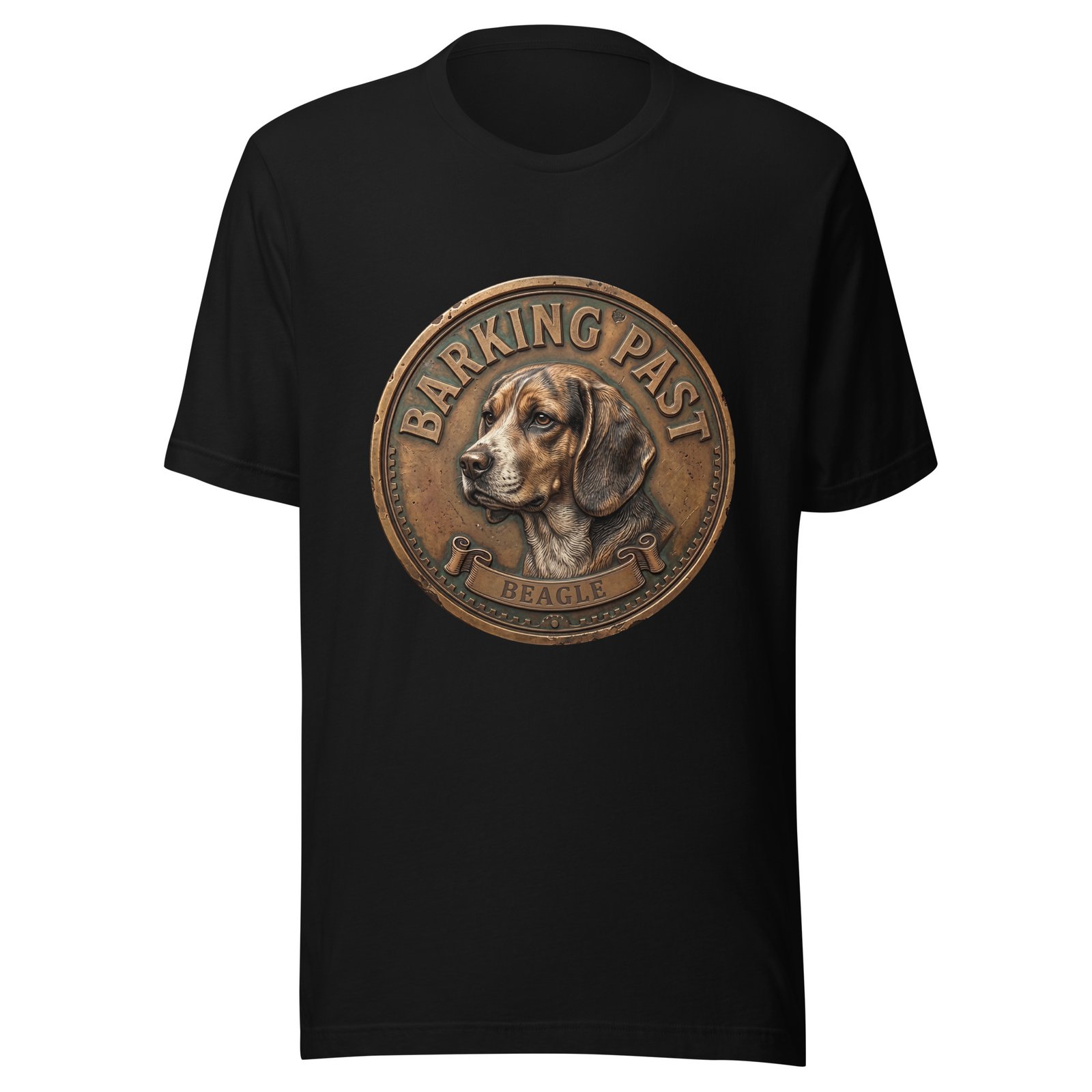
The Medallion
The Barking Past bronze medallion for this breed, struck with the Beagle in relief and its name on the ribbon.
Barking Past
Beagle Medallion Tee
Bella + Canvas 3001 staple tee. Six colours, XS–5XL, $29.99 with free US shipping. Printed to order.
Order the teeI. Containment & Tracking
A Beagle on a scent is gone. Assume it, and build the setup around it rather than around good intentions.
Freedom
30ft biothane long line
Lets the dog work a trail properly without giving up control. The single best purchase for this breed.
AmazonEscape
Escape-proof harness
Beagles reverse out of collars and standard harnesses. A three-strap design does not allow it.
AmazonRecovery
GPS tracker collar
For the day the fence loses. Real satellite tracking, not a Bluetooth tag with a hundred-foot range.
AmazonFence
Ground anchor stakes
Beagles dig under fences rather than over them. Anchor the bottom edge and the problem disappears.
AmazonID
Engraved ID tag
Boring, cheap, and the thing that actually gets a lost hound home the same evening.
AmazonDistance
Hands-free waist leash
For the daily distance walking this breed needs considerably more of than owners expect.
AmazonII. Nose & Waistline
A Beagle’s brain is a nose. Give it work and it stops inventing its own — usually at volume, usually at 2am.
Scentwork
Nose work starter kit
Scent tins and target odour. Fifteen minutes of searching tires a Beagle more thoroughly than an hour of walking.
AmazonFeeding
Snuffle mat
Turns a meal into a fifteen-minute hunt. Slows the eating and burns real mental fuel.
AmazonPace
Slow-feeder bowl
Beagles inhale food. A maze bowl is the cheapest intervention available against both gulping and weight gain.
AmazonControl
Digital food scale
Cups are not a unit of measurement. Weighing meals is how you keep a Beagle lean for fifteen years.
AmazonTraining
Low-calorie training treats
You will train with food. Use small, low-calorie treats or you will train the dog straight into obesity.
AmazonAlone time
Treat-dispensing puzzle
For the hour you are on a call and the dog is bored, loud and looking for a project.
AmazonIII. Coat & Ears
Short coat, low effort — with two exceptions that catch new owners out every time.
Barking Past is an Amazon Associate. The links above are affiliate links — if you buy through them we earn a small commission at no extra cost to you. It does not change what we recommend.
Sources & further reading
- Dame Juliana Berners, The Boke of Saint Albans (1486) — early listing of English hound types.
- Edward, second Duke of York, The Master of Game (c. 1406–1413).
- Nicholas Cox, The Gentleman’s Recreation (1674).
- ‘Stonehenge’ (John Henry Walsh), The Dog in Health and Disease (1859) — contemporary description of the beagle varieties.
- The Beagle Club (England), founded 1890 — first breed standard; Association of Masters of Harriers and Beagles, 1891.
- American Kennel Club registration records from 1885; National Beagle Club of America, founded 1888; Gen. Richard Rowett import records, Carlinville, Illinois, 1870s.
- USDA APHIS, Beagle Brigade agricultural detector dog programme, established 1984.
- University of California, Davis Veterinary Genetics Laboratory — Musladin-Lueke Syndrome, Factor VII and primary open-angle glaucoma DNA tests; Orthopedic Foundation for Animals breed statistics.