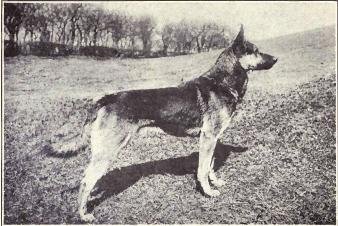
Forged for function
One man wanted the complete working dog.
In 1899, Max von Stephanitz acquired a working shepherd named Horand von Grafrath and made him the foundation of a new breed. The goal was not a dramatic show silhouette. It was intelligence, nerve, athleticism and usefulness.
When traditional shepherding declined, the breed did not become obsolete. Von Stephanitz pushed it into police and military service, establishing the template for the modern service dog.
The name that got erased
Politics turned a German dog into an “Alsatian.”
During the First World War, anti-German feeling caused the American Kennel Club to shorten the name to “Shepherd Dog” in 1917. Britain adopted “Alsatian Wolf Dog.” America restored the proper name in 1931; Britain did not fully restore it until 1977. The dogs never changed—only the politics did.
The great split
Working lines
Generally bred for drive, nerve, athleticism and task performance. They often have flatter backs, higher energy and a serious need for structured work.
The great split
Show lines
Bred more heavily toward appearance and movement in the ring. Some lines developed exaggerated rear angulation and sloping or roached toplines—the center of an ongoing welfare dispute.
Health without spin
The breeder matters as much as the breed.
Hip and elbow dysplasia, degenerative myelopathy and bloat are the major risks. Poor breeding can also produce weak nerves, fearfulness or reactivity. Look for documented hip and elbow evaluations, appropriate genetic screening, stable parents and a breeder who matches the line to your actual life.
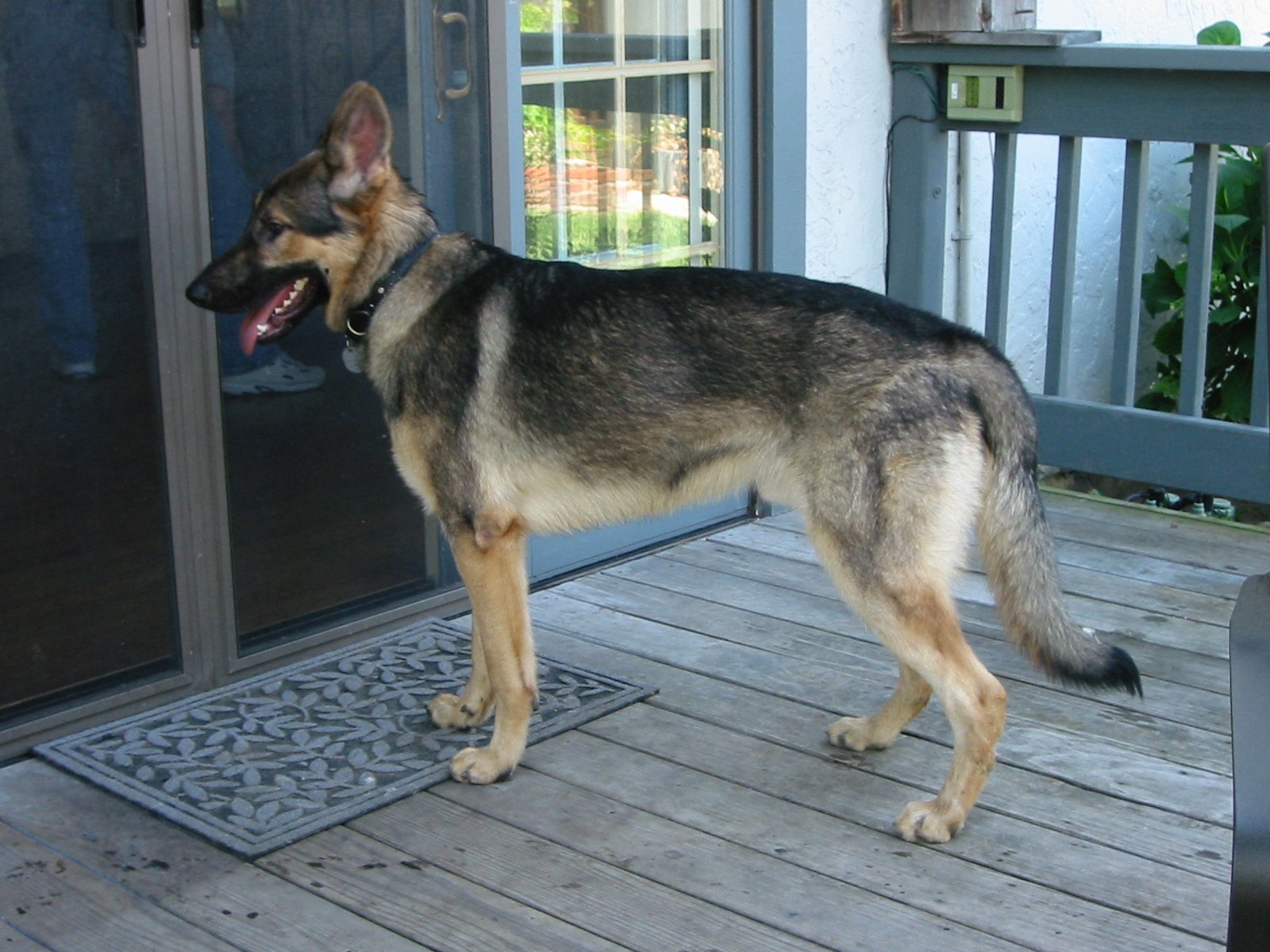
Best owner
Active, present and committed
A person or family prepared for daily physical work, mental challenges, early socialization and consistent training—and willing to select the right line rather than the most dramatic-looking puppy.
Worst mismatch
Sedentary or absent homes
People seeking an effortless guard dog, a decorative status symbol or a low-maintenance pet. An under-worked Shepherd can become anxious, destructive, reactive or dangerously difficult.