Breed Dossier No. 002 · Working Group
Akita
A bear-hunting dog from northern Japan that was crossed into a fighting dog, nearly erased twice, and rebuilt by committee. It is not a giant Shiba.

Akita Medallion Tees
The unvarnished verdict
A dog that decides who you are, then acts accordingly.
The Akita is a hunting dog that was repurposed as a weapon and then rescued as a national symbol — and all three of those dogs are still in there. The matagi hunters of Akita Prefecture in northern Honshu bred it to corner Ussuri brown bear, boar and Yezo deer and hold them at bay until a man with a spear caught up. That is the job description. Everything in the temperament follows from it.
In the late 1800s the Odate region turned to organised dog fighting, and Akitas were crossed with Tosa, Mastiff, Great Dane and St. Bernard to make them bigger and harder. The original type nearly disappeared. In July 1931 the Japanese government designated the Akita a Natural Monument — the first dog breed to be protected that way — and the rebuilding started.
Then the Second World War nearly finished it a second time. What survived was reassembled from a handful of lines, one of them carrying German Shepherd blood. The Akita you meet today is a reconstruction, and it is still an argument between two countries.
Ownership scorecard
Intelligent is not the same as obedient.
Trainability
4/10
Learns a cue in a handful of reps, then weighs it against its own judgement. Frequently wins.
Energy
5/10
Moderate physical needs, enormous need for structure. A tired Akita is still a thinking Akita.
Family fit
4/10
Devoted to its own people, flatly indifferent to strangers, unreliable with other dogs.
Grooming
6/10
Double coat, blows out twice a year in sheets. Not skilled work — just relentless volume.
Origins
Bred to hold a bear, not to please you.
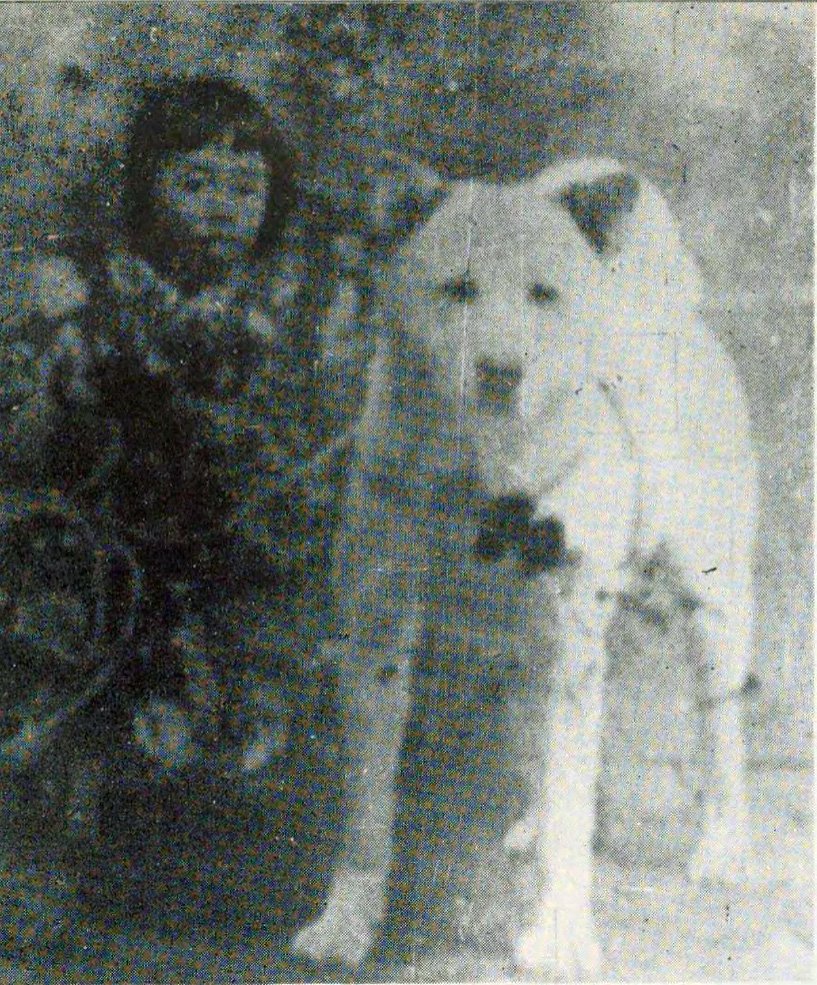
The matagi were professional winter hunters in the mountains of northern Honshu. Their dogs worked in ones and twos, well ahead of the man, and their job was to find large game, engage it, and hold it in place — barking, circling, dodging — long enough for the hunter to close the distance.
A dog that checks in with its handler every ten seconds cannot do that work. Independence was not a flaw the breed later developed; it was the specification. So was silence, physical courage, and a willingness to make contact with something much larger than itself.
The pit nearly erased it.
By the Meiji era, Odate had become a centre for organised dog fighting, and breeders crossed the native dogs with imported Tosa, Mastiff, Great Dane and St. Bernard to add size and aggression. Fighting was banned in Odate in 1908, but by then the original type had been thoroughly diluted.
In 1927 the mayor of Odate, Shigeie Izumi, founded the Akita-inu Hozonkai (AKIHO) specifically to find and preserve what was left. Four years later the government named nine dogs Natural Monuments. The breed was, in a real sense, put back together on purpose.
Hachiko is a true story. It is not the story you were told.
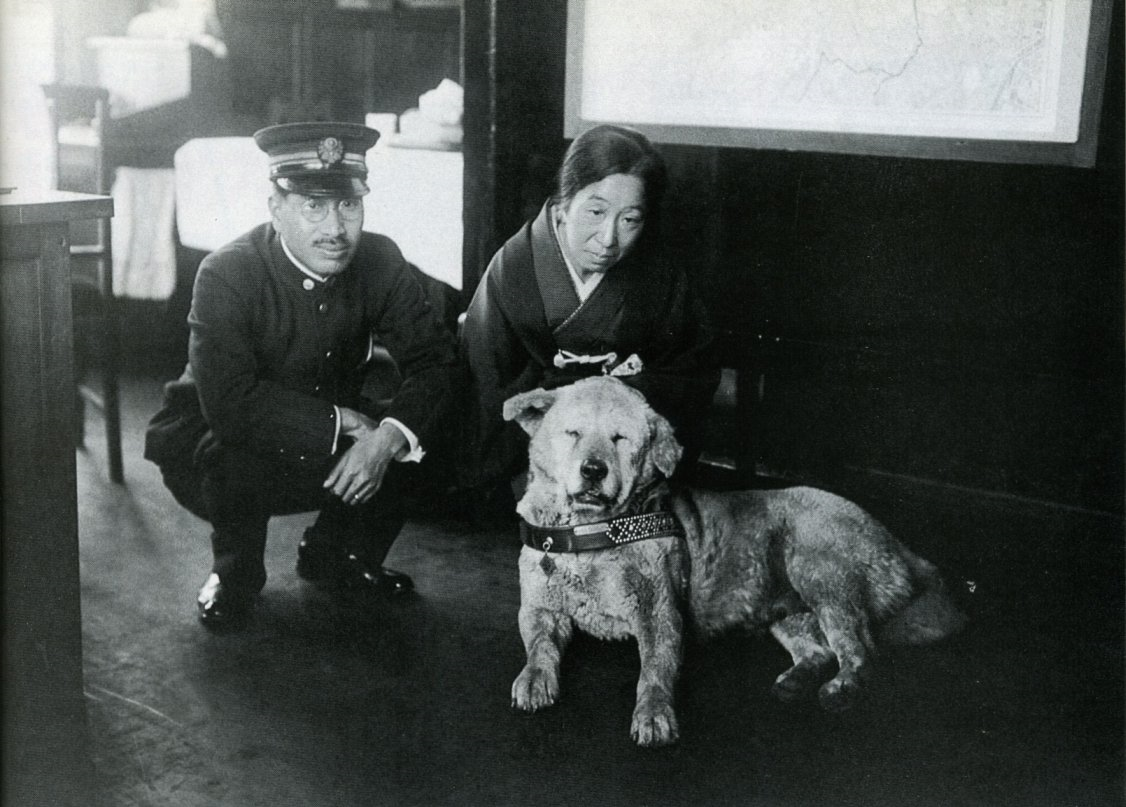
Hachiko was born in Odate on 10 November 1923 and went to Professor Hidesaburo Ueno of Tokyo Imperial University. Ueno died of a cerebral haemorrhage on 21 May 1925, roughly sixteen months later. The dog returned to Shibuya Station and kept returning for nine years, until his own death on 8 March 1935.
The sentimental version leaves out the middle. For years he was treated as a nuisance — chased off by station staff, harassed by street vendors and children — until a 1932 newspaper article turned him into a national symbol of loyalty. The bronze statue went up in April 1934 while he was still alive to attend the unveiling. It was melted down for the war effort and recast in 1948.
What the story actually demonstrates is the trait owners find hardest to live with: an Akita bonds to a person, not to people, and it does not update that decision when circumstances change.
The part that gets left out
The war ate the breed.
Wartime Japan faced food shortages and a demand for fur. Non-military dogs were ordered culled and their pelts used for uniforms. German Shepherds were exempt, so some owners crossed their Akitas with Shepherds to save them; others hid dogs in the mountains with matagi families.
What came out the other side was three inconsistent groups of survivors. Japanese breeders spent decades pulling the Shepherd influence back out and restoring the native type. American servicemen, meanwhile, took home the bigger, heavier dogs from the Shepherd-influenced line — which is why the FCI recognised the Japanese Akita and the American Akita as separate breeds in 1999.
Helen Keller carried the first one to America.
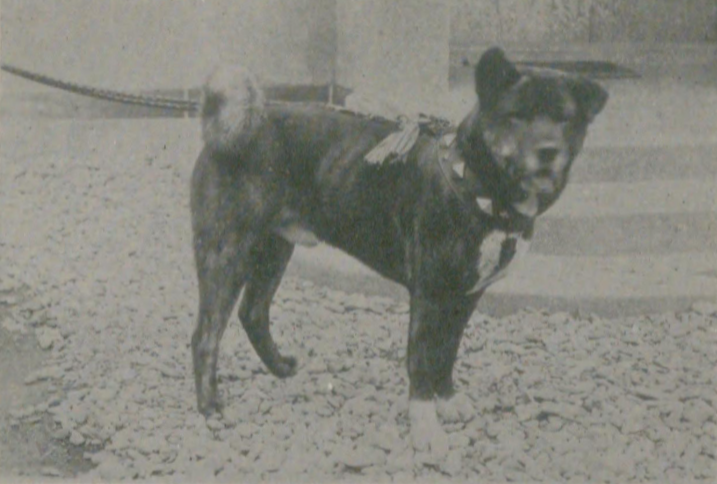
Keller visited Akita Prefecture in 1937 and was given a puppy named Kamikaze-go. He died of distemper within months, and the Japanese government sent his brother, Kenzan-go, in 1938. Those two dogs were the first Akitas in the United States.
The real import wave came after 1945, with servicemen returning from the occupation. The AKC recognised the breed in 1972 and placed it in the Working Group. Fifty years on, the American and Japanese versions still do not agree on what an Akita should look like.
It will not be managed by repetition.
Akitas are quiet dogs. They rarely bark without reason, which sounds like a virtue until you realise it also means less warning before the dog acts. Add a serious prey drive and near-universal same-sex dog aggression and you have an animal whose management burden is social, not physical.
Harsh correction backfires badly here — you get a dog that stops signalling rather than a dog that complies. What works is early, neutral exposure (watching the world go by, not wrestling with strange dogs), short sessions, high-value food, and an owner who has decided in advance which fights are worth having.
Expect a dog that is clean, house-proud, largely undemanding indoors, and completely unwilling to be everybody’s friend.
Health & genetics
Screen the hips. Then screen the immune system.
The Akita carries a distinctive autoimmune cluster on top of the usual large-breed orthopaedic and gastric risks. A responsible breeder will have paperwork for all of it and will offer it before you ask.
Autoimmune cluster
Vogt-Koyanagi-Harada / uveodermatologic syndrome, pemphigus foliaceus and sebaceous adenitis all appear in Akitas far above baseline. Watch for pigment loss around the eyes, nose and lips, and for sudden eye pain — VKH can blind a dog quickly.
Hip & elbow dysplasia
OFA or PennHIP evaluations on both parents, not on the puppy. In a hundred-pound dog this is not optional paperwork.
Hypothyroidism
Common, and often the hidden explanation for coat loss, weight gain and a temperament change owners blame on the dog. Ask for full thyroid panels on the parents.
Bloat / GDV
Deep-chested and high risk. It kills in hours. Learn the signs before you need them and discuss a prophylactic gastropexy at spay or neuter.
Progressive retinal atrophy
A DNA test exists. There is no defensible reason for an untested breeding pair, and no reason for you to accept one.
Anaesthesia sensitivity
Akitas are documented to react poorly to some sedative and anaesthetic protocols. Tell your vet before the procedure. Also note that normal Akita blood runs microcytic and is routinely misread as anaemia.
Best owner
Experienced, calm and physically capable. One dog, real fencing, no illusions about dog parks. Someone who finds a dog with its own opinions interesting rather than insulting, and who is happy with affection that is reserved rather than constant.
Worst mismatch
A first-time owner. A busy household with a rotating cast of visiting children and dogs. An existing same-sex dog. Anyone who wants a big friendly dog that greets everyone at the door — the Akita is not that dog and will not become it.
The bottom line: the Akita is an outstanding dog for a small number of people and a genuine liability for everyone else. Clean, quiet, dignified, loyal past the point of reason — and making its own decisions about other dogs for its entire life. Buy the dog that exists, not the one from the film.
Owner’s kit
The Akita Kit
Chosen for the actual failure modes of this breed: coat volume, containment, and a dog strong enough that hardware quality stops being a preference.
The Medallion
Two medallions for this dossier, because the Japanese Akita and the American Akita are two different breeds and owners know the difference.
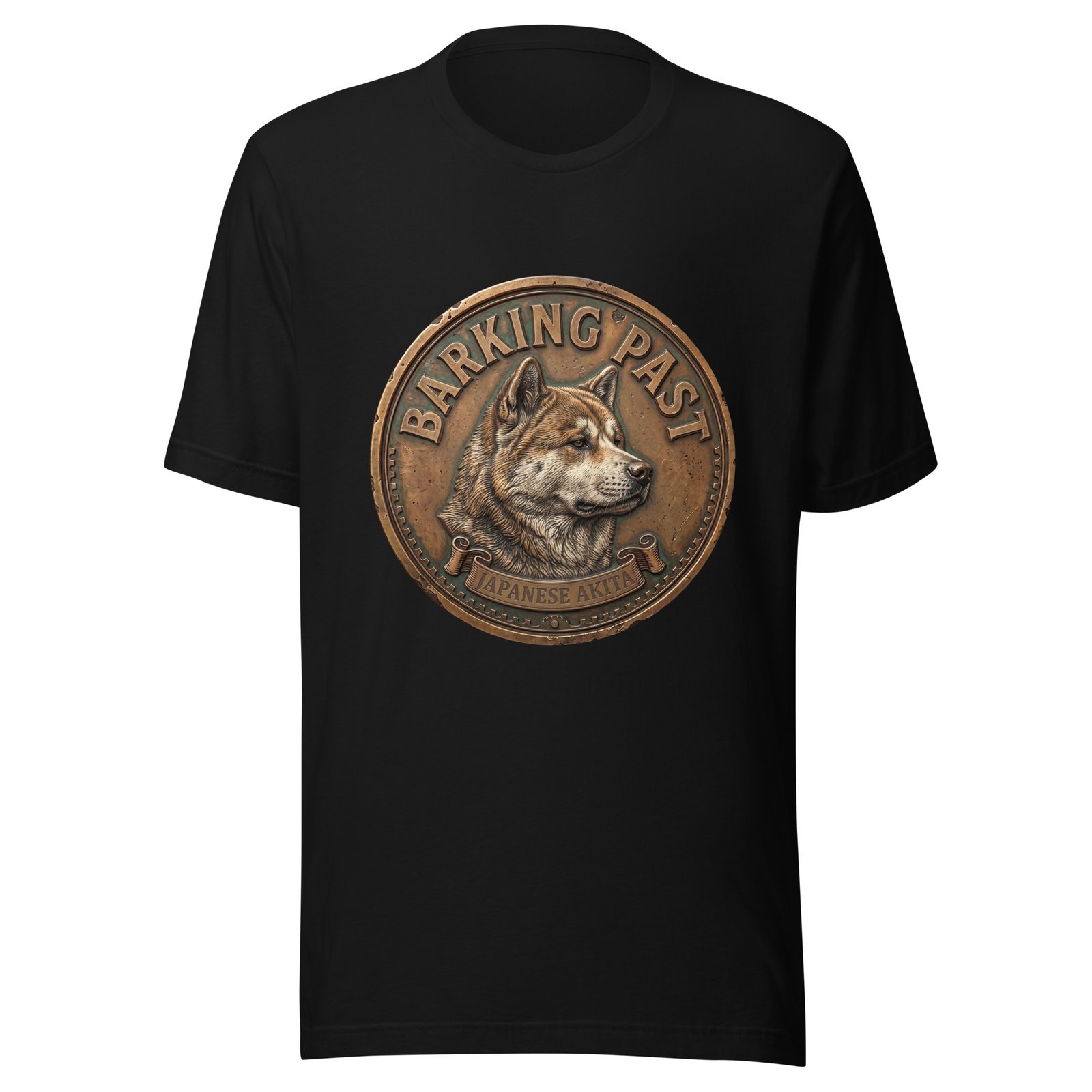
Barking Past
Japanese Akita Medallion Tee
Bella + Canvas 3001 staple tee. Six colours, XS–5XL, $29.99 with free US shipping. Printed to order.
Order the tee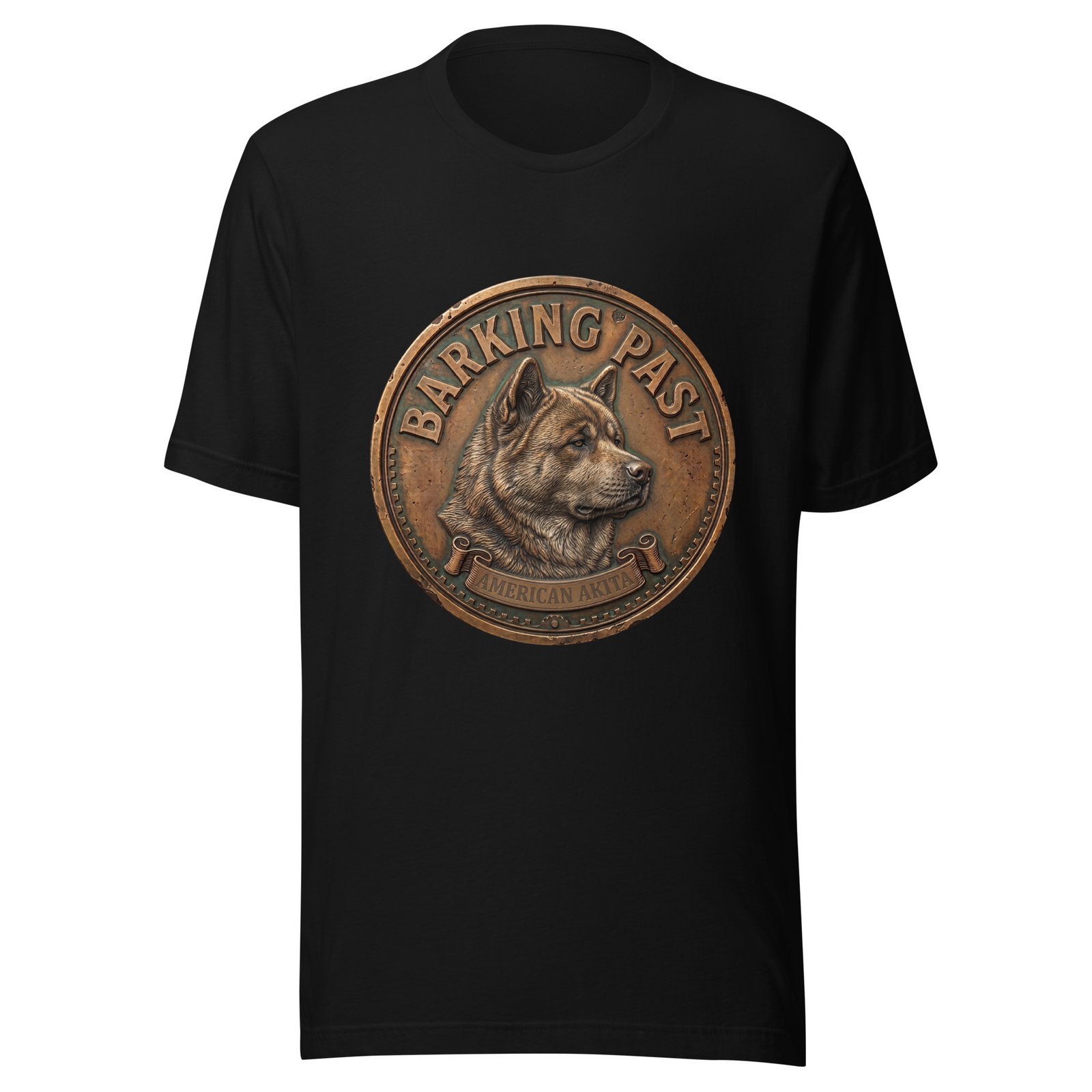
Barking Past
American Akita Medallion Tee
Bella + Canvas 3001 staple tee. Six colours, XS–5XL, $29.99 with free US shipping. Printed to order.
Order the teeI. The Coat
An Akita drops its undercoat twice a year in sheets. This is a volume problem, not a skill problem — you need tools that move a lot of hair quickly.
Undercoat
Undercoat rake
The most useful tool you will own. Pulls dead undercoat without cutting the guard coat.
AmazonBlowout
High-velocity dryer
Clears the loose coat in one session instead of six weeks of it landing on your floor.
AmazonDaily
Slicker brush & steel comb
Slicker for the body; the comb proves you actually reached skin behind the ears and on the trousers.
AmazonBath
Deshedding shampoo
Loosens the undercoat before a blowout. Bathing a shedding Akita without it is wasted water.
AmazonSetup
Grooming table with arm
A hundred-pound dog groomed on the floor is a wrestling match. On a table it is a routine.
AmazonII. Containment & Control
A strong, prey-driven, dog-selective animal needs hardware rated for the worst two seconds of the year, not the average walk.
Leash
Heavy biothane leash
Six feet, wide, no stretch. Cheap webbing fails at the hardware exactly when it matters.
AmazonCollar
Martingale collar
Limited-slip, no choke. Stops the backwards escape without reaching for a prong.
AmazonHarness
Front-clip harness
Gives you a steering point on a dog that outweighs half the people who will walk it.
AmazonFence
Ground anchor stakes
Akitas dig. A six-foot fence with a soft bottom edge is a suggestion, not a barrier.
AmazonLong line
30ft biothane long line
The honest way to give an Akita space. Off-leash recall in this breed is a coin flip.
AmazonCrate
Heavy-gauge crate
Not punishment. Management for visitors, contractors and the dog’s own downtime.
AmazonIII. Mind & Jaw
Boredom in this breed does not present as chewing. It presents as a dog that quietly stops consulting you.
Barking Past is an Amazon Associate. The links above are affiliate links — if you buy through them we earn a small commission at no extra cost to you. It does not change what we recommend.
Sources & further reading
- Japanese Ministry of Education, designation of the Akita as a Natural Monument (tennen kinenbutsu), July 1931.
- Akita-inu Hozonkai (AKIHO), founded at Odate in 1927 by mayor Shigeie Izumi — registry and standard records.
- Mayumi Itoh, Hachiko: Solving Twenty Mysteries About the Most Famous Dog in Japan (2013).
- Barbara Bouyet, Akita: Treasure of Japan, Volumes I–II.
- Joan McDonald Brearley, The Book of the Akita, T.F.H. Publications.
- American Foundation for the Blind, Helen Keller Archive — records relating to Kamikaze-go and Kenzan-go, 1937–1938.
- American Kennel Club breed recognition records, 1972; FCI separation of the Akita and American Akita, 1999.
- Orthopedic Foundation for Animals breed statistics; Akita Club of America health survey data.